
Under Construction
🍎
Under Construction 🍎
Find your OSA chapter
Our work is grounded by our student-led chapters — check out the map to see if your university has an OSA chapter.
Not seeing one? We’ll help you start your own.
Our Chapters

How do I become an OSA member?
It's easy! Fill out the form here. We will make sure to keep you in the loop concerning statewide meetings, upcoming events, calls to action, our newsletters, and so forth. If there's already a campus chapter at your university, we'll connect you!
What if osa isn’t on my campus?
Not a problem— We’ll help you start a chapter.
Email us at OhioStudentAssociation@OHorganizing.org with your university, major, year, and why you want to get involved. One of our staff members will reach out and get you set up!
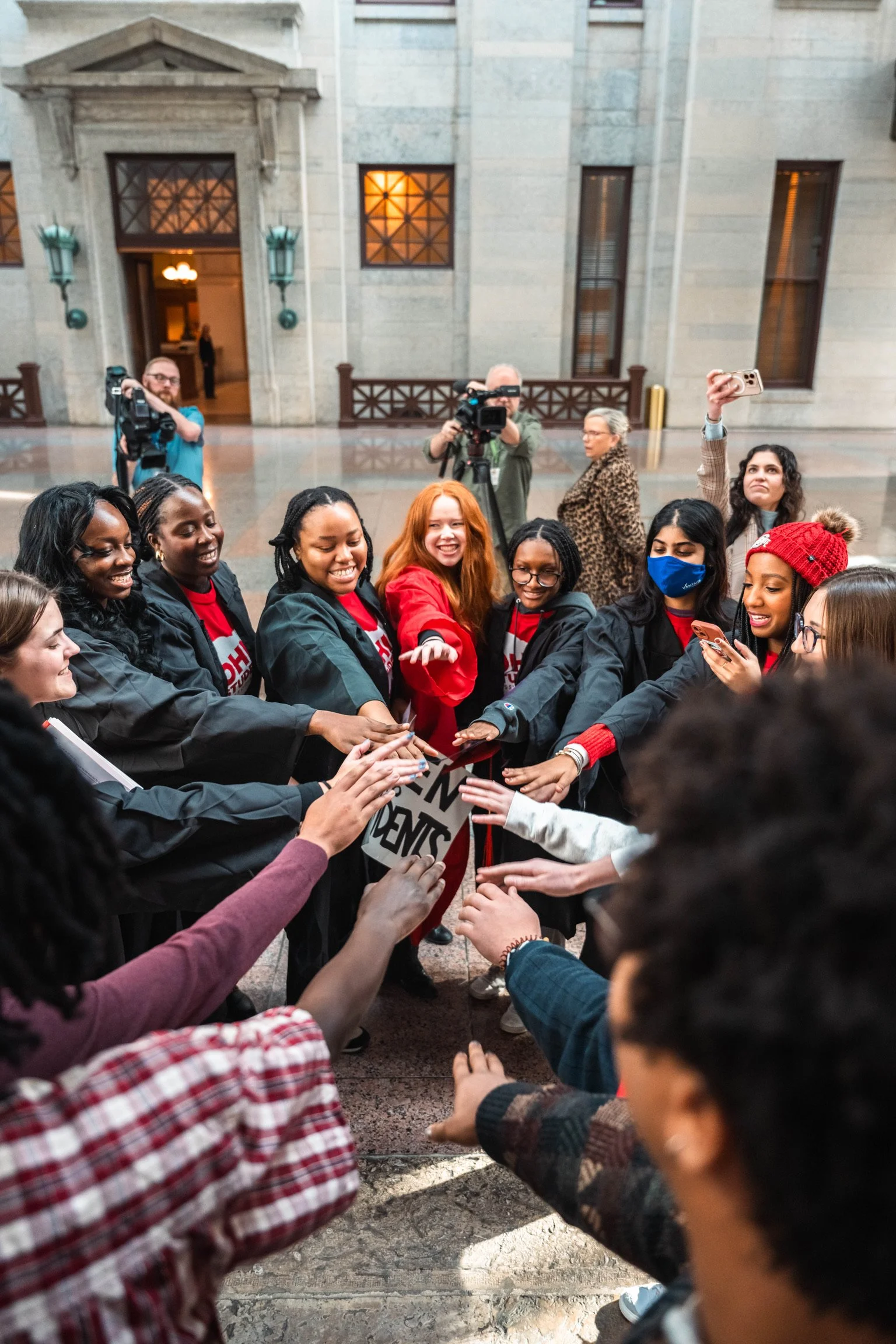
What do chapters do?
OSA’s approach to organizing is people-centered and based in grassroots relationship-building. Fundamental to our vision are strong and independent chapters led by student-leaders who plan and organize around the issues that they themselves are impacted by and passionate about.
To help us reach our collective goals, our chapters:
Recruit and train student organizers who are passionate about social justice
Plan and run campaigns that win concrete improvements to the lives of students
Conduct voter registration and education with the aim of educating students about what’s on the ballot and how they can use their power as voters to make change on the issues that matter to them
Build a strong base of organized students who can wield power to make progressive change, both on campus and in collaboration within the broader community
Campus chapters serve as a political home on campus, where students come together to organize to build collective power that will allow them to enact change on campus and beyond.
For example: On campus, our students may organize to push for more funding for mental health services in the university’s budget. Connected chapters may collaborate to plug in on a local ballot measure fight that students care about. Our chapters then work together to fight for increased funding for need-based financial aid in the state budget, and when we work with other student organizations in the nation, we can fight for federal student loan debt cancellation.